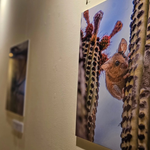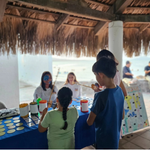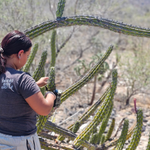

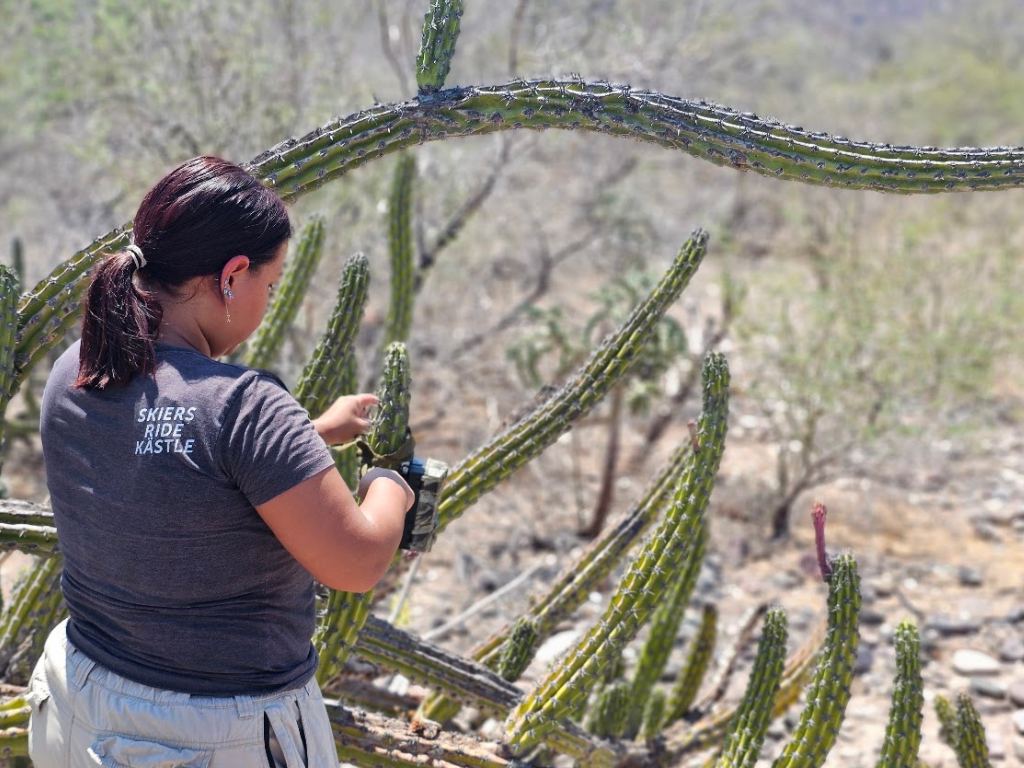
This summer, we continued our project “The Ecological and Cultural Value of Pitayas in Baja California Sur,” a study focused on learning more about sweet pitaya (Stenocereus thurberi) and sour pitaya (Stenocereus gummosus) in our region.
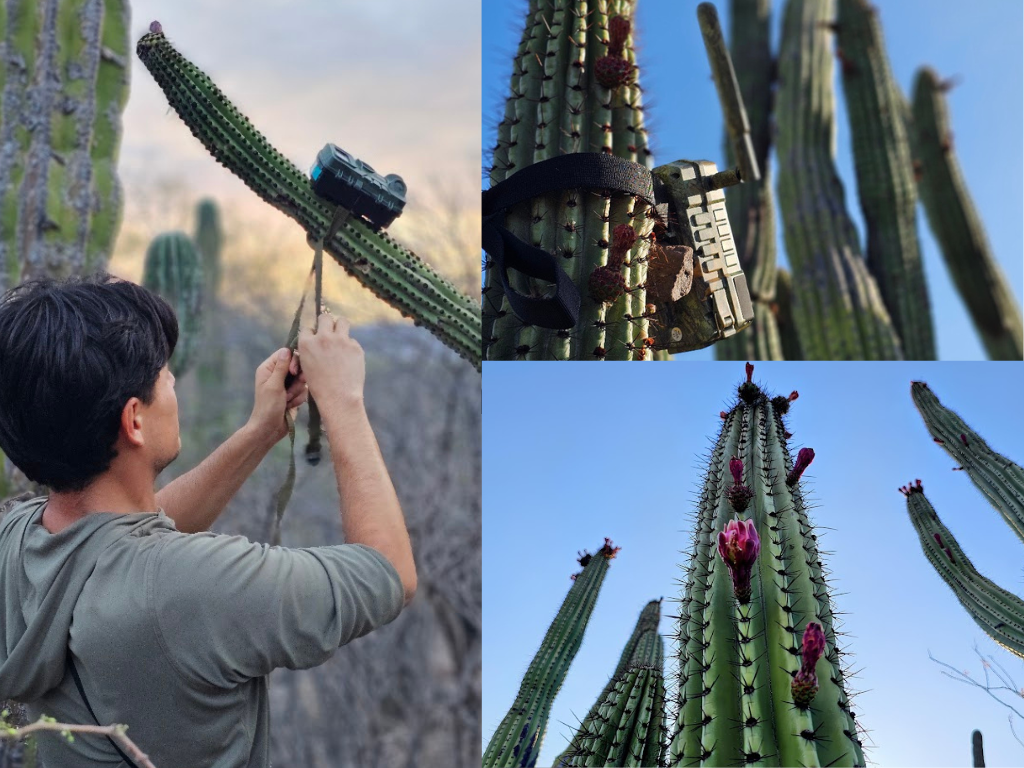
Throughout the season, we documented different stages of their life cycle, from flowering to fruiting, while also recording their relationship with wildlife and the traditional uses that communities throughout Baja California Sur have maintained and passed down through generations.
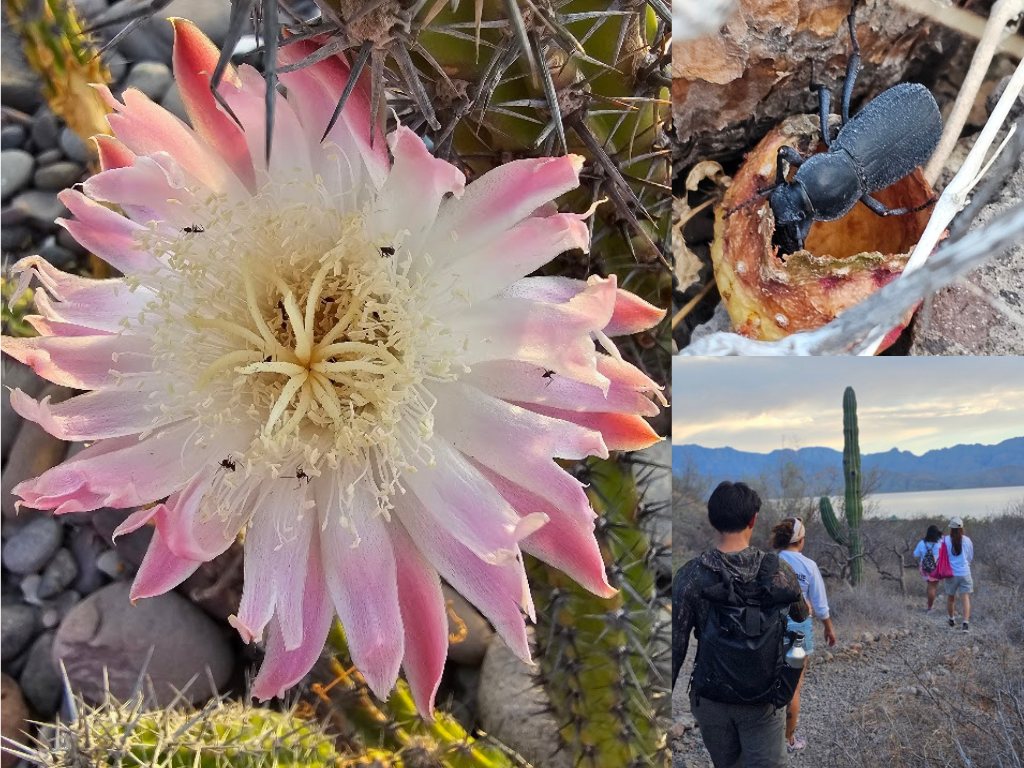
Pitayas are much more than desert fruits. These cacti are an important part of arid ecosystems and play a significant role in the interactions between plants, animals, and people. At the same time, they are part of the biocultural heritage of Baja California Sur, where their use and traditional knowledge are closely connected to local communities and the landscape.
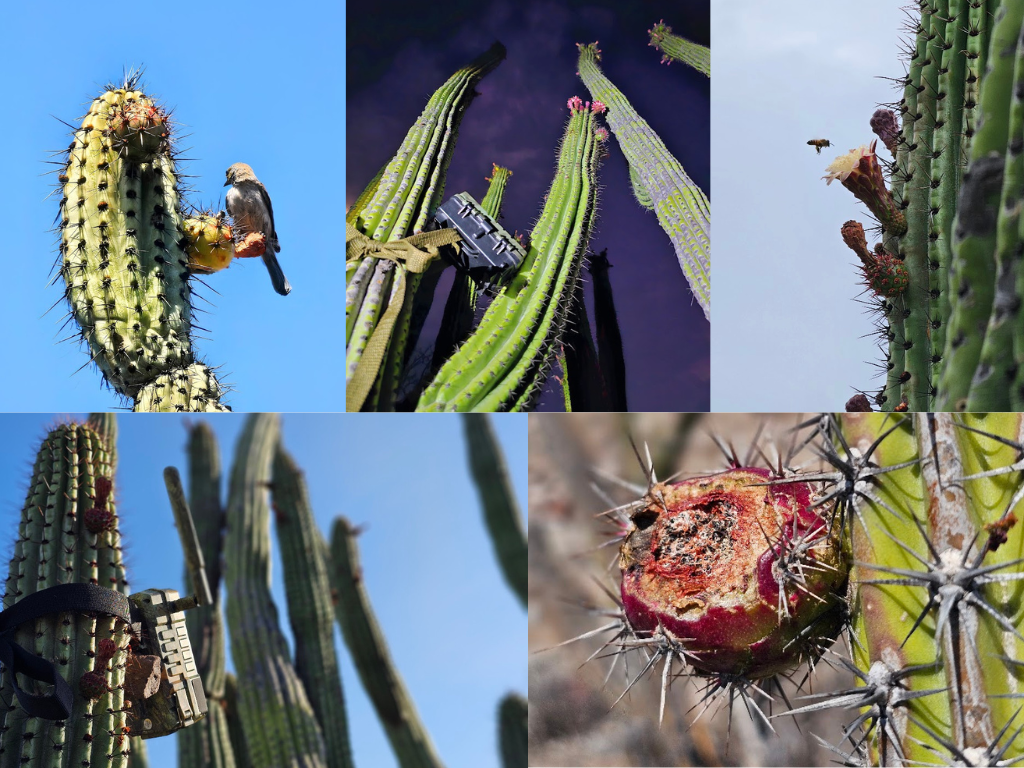
Through this project, we aim to generate information that contributes to the knowledge, conservation, and appreciation of these species, while developing a better understanding of their ecological and cultural importance.
Each season gives us a new opportunity to observe, learn, and discover the life that develops around these iconic cacti of Baja California Sur.